
Restorative Justice Education Training Offerings
Core Curriculum: Restorative Justice Principles & Culturally Appropriate Relationships and Interactions
Our training curriculum delves deep into the critical values that underpin Restorative Justice and Culturally Appropriate Relationships and Interactions, emphasizing not only theoretical understanding but also practical application. Participants will learn:
Our training modules are thoughtfully created to address the unique needs and challenges of various environments, ensuring that participants can effectively apply Restorative Justice principles and practices and Culturally Appropriate Relationships and Interactions in their specific contexts:
Our training curriculum delves deep into the critical values that underpin Restorative Justice and Culturally Appropriate Relationships and Interactions, emphasizing not only theoretical understanding but also practical application. Participants will learn:
- The foundational principles of Restorative Justice: Moving beyond punitive approaches, our curriculum highlights the importance of building caring and authentic relationships, repairing harm, building the capacity for empathy, and fostering genuine responsibility.
- The art of developing culturally appropriate relationships: Our trainings provide insights and tools for building respectful and caring relationships across diverse backgrounds and cultural values.
- Practical implementation strategies: We move beyond theory to provide concrete, actionable steps for integrating Restorative Justice principles and practices and Culturally Appropriate Relationships and Interactions into various settings.
Our training modules are thoughtfully created to address the unique needs and challenges of various environments, ensuring that participants can effectively apply Restorative Justice principles and practices and Culturally Appropriate Relationships and Interactions in their specific contexts:
- In the Classroom: It's about doing school "with" students. Empowering educators with strategies for address and working through conflict, fostering positive learning communities, and building authentic student relationships.
- Within a School: Developing school-wide approaches - blending Restorative Justice principles and practices with current school initiatives and discipline processes, peer facilitation, and community building, promoting a culture of care, respect and a sense of connectedness and belonging.
- Across the School District: Implementing systemic changes to create district-wide Restorative Justice initiatives, fostering a consistent and equitable approach to student care and support.
- In School Programs: Integrating restorative practices into after-school programs, extracurricular activities, and special education services.
- In Human Services Organizations & Programs: Equipping social workers, counselors, and other human services professionals with tools for addressing and working through conflict, client engagement, and community building.
- Within the Home Setting: Providing parents and families with practical strategies for working through conflict, improving communication, establishing household norms and agreements, and fostering stronger family bonds.
Restorative Justice Education (RJEd) is a 501(c)3 non-profit organization with the mission to use Restorative Justice Principles and Practices to foster culturally appropriate relationships and interactions.
By teaching the principles and practices of restorative justice to educators, school staff and school boards, superintendents, and social workers, as well as parents and students, they are able to train others in their various communities.
Most trainings are offered as online courses or virtual trainings that are coordinated and instructed by our trained RJEd Facilitators. For Face-to-Face or in-person trainings, and to create a contextualized plan for your school, district and/or team, please Contact Us.
Please peruse our roster of trainings below.
By teaching the principles and practices of restorative justice to educators, school staff and school boards, superintendents, and social workers, as well as parents and students, they are able to train others in their various communities.
Most trainings are offered as online courses or virtual trainings that are coordinated and instructed by our trained RJEd Facilitators. For Face-to-Face or in-person trainings, and to create a contextualized plan for your school, district and/or team, please Contact Us.
Please peruse our roster of trainings below.
RJEd Trainings
Intro to Culture of Care
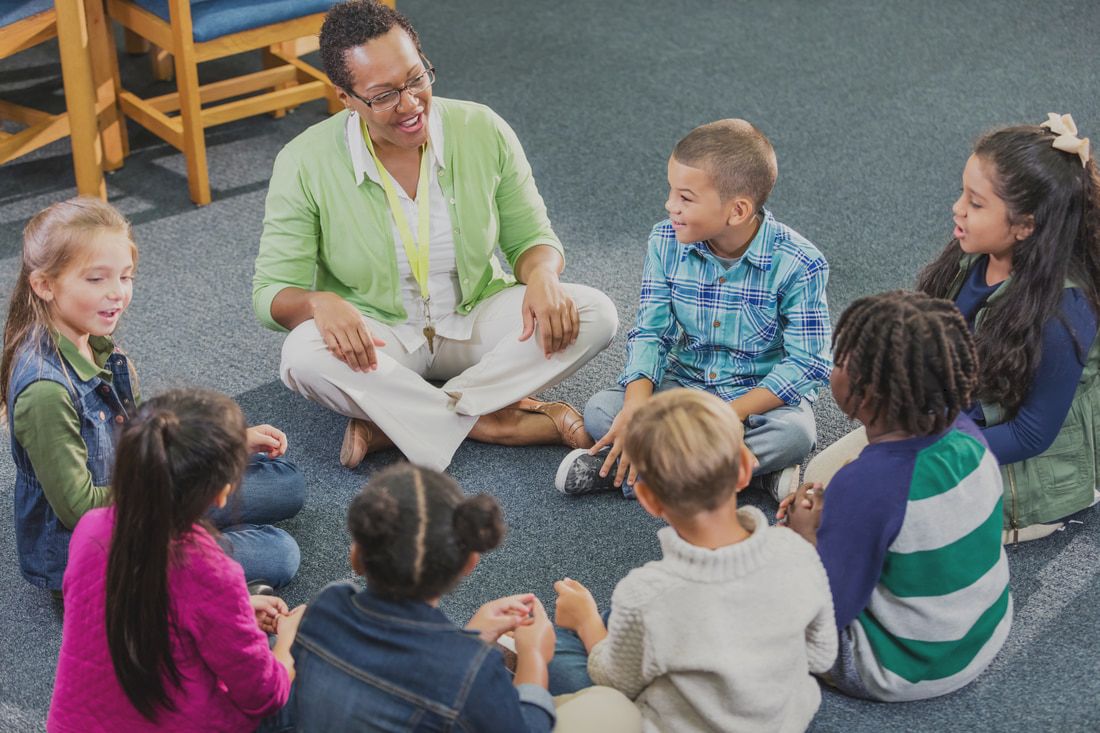
The Intro to Culture of Care training teaches participants the basic principles of restorative justice and the importance of building healthy relationships.
During the training's 16 modules (broken into 4 Tiers), participants will engage in Community Building Circles, Norm Setting Circles, Restorative Conversations, Restorative Circles, and learn how to respond to misbehavior problems (from minor to major) and conflict. The basic training is offered in a face-to-face, online (self-paced & blended), or live webinar format. Upon completion of the training, participants will create an action plan to become a Certified Specialist in Creating a Culture of Care in Schools using Restorative Justice Principles and Practices. Participants will also be eligible to register for 2 Master's Level credits from CSU upon completion. |
Intro to Culture of Care
|
Implementing a Culture of Care: Advanced Training
This course is designed for consultants and those working with schools on implementing restorative justice practices via Restorative Justice Education's K-12 research-based pedagogy.
This is a 16-module training provided via a virtual, self-paced, and blended format that allows participants to complete the course as quickly as they choose over a 12-month period. Upon completion of the training, participants will create an action plan and become a Certified Consultant in Creating a Culture of Care in Schools using Restorative Justice Principles and Practices. Participants will also be eligible to register for 3 Master's Level credits from CSU upon completion. Prerequisite: Participants must have completed the "Intro to Culture of Care" training in order to take the Advanced Training. |

Culture of Care for School Boards & SuperintendentsIn this one-day training participants can discover how to create and sustain a culture of care that will facilitate greater student well-being and better learning outcomes. This training was originally created for the New York State Board of Education, in association with the New York State School Boards Association and the State of New York Unified Court System and is now offered face-to-face and as a virtual training to all interested parties.
|
Culture of Care: In the HomeOffered face-to-face (one day training 6 hours - can be split over the course of two days), or as an online course in a “Trainer of Trainer” format guided by an RJEd Facilitator.
This professional development training is designed to engage participants in understanding diverse parenting styles, how to identify the function of children’s behavior and will cultivate key restorative justice principles and practices. This training is designed to promote a Culture of Care in the home, facilitate connectedness and repair harm caused within relationships. |